Image:Tesla
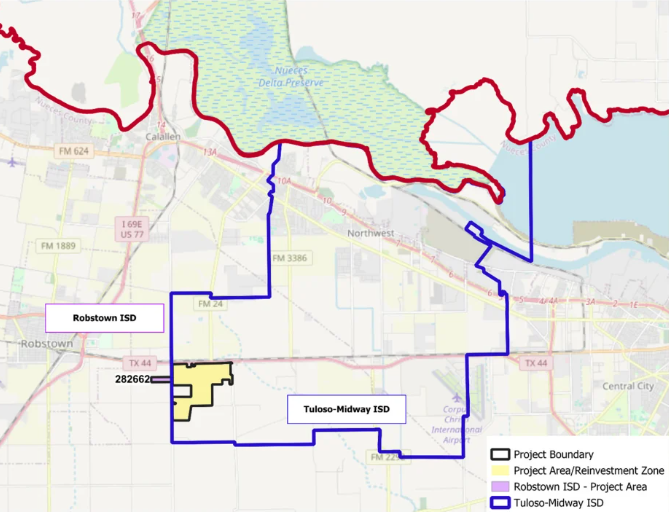
Tesla has filed an application for property tax abatements to build a USD 3.1 billion high-purity polysilicon facility in Nueces County, Texas, filling the upstream raw material gap in its vertically integrated photovoltaic manufacturing roadmap. Submitted to the Tuloso-Midway Independent School District under Texas’s Jobs, Energy, Technology and Innovation (JETI) program, the tax incentive is a critical prerequisite for the project to move forward.
According to an economic impact assessment prepared by EY accompanying the filing, Tesla will abandon the investment if the requested property tax break is not approved. The application seeks a 50% reduction in school-district property taxes from 2031 through 2040. Starting in 2041, Tesla would pay property taxes to the school district in full based on the property’s assessed value. Steve VanMatre, Superintendent of Tuloso-Midway Independent School District, confirmed to local outlet KRIS 6 that the district is aware of Tesla’s major investment proposal, though the project has not yet been finalized.
The plant will produce PV-grade high-purity polysilicon using ultra-pure trichlorosilane (TCS) as feedstock. Construction is scheduled to kick off in 2027, with commercial operation targeted for 2030. The workforce will ramp up gradually: 260 initial roles in 2030, rising to 515 employees by 2032. Most of the USD 3.1 billion capital outlay will be deployed between 2028 and 2029: USD 1.5 billion for engineering and construction, USD 1.4 billion for equipment procurement, and USD 183 million for utility and supporting infrastructure. Industry estimates peg the facility’s annual output at roughly 30,000 to 40,000 tonnes.
Domestic supply of PV polysilicon remains tight across the United States, and new polysilicon capacity carries substantial capital costs. Industry benchmarks show a conventional 20,000-tonne-per-annum polysilicon plant can cost between USD 1.5 billion and USD 2 billion to build. The application lands shortly before the Section 232 tariff on polysilicon and derivative products takes effect on December 4. The tariff imposes a 15% duty plus floor pricing, which will substantially raise the cost of imported polysilicon. Even if the USD 3.1 billion plant comes online as planned, its output will not cover the full raw material demand of Tesla’s 100GW photovoltaic manufacturing hub. Nevertheless, the project aligns with the policy intent of Section 232 to grow domestic U.S. capacity for polysilicon, ingots and wafers.
Global supply-chain controls introduce uncertainty for the development. China’s Ministry of Commerce previously sought public feedback on export restrictions covering polysilicon, ingots, wafers and PV cell manufacturing equipment; the consultation period closed on November 15. Restrictions include production equipment for single lines with capacity ≥30,000 tonnes per year. Final implementation rules will directly shape Tesla’s options for sourcing equipment for the new facility.
This polysilicon project forms a key piece of Tesla’s broader PV value-chain buildout in Texas. The company’s USD 10.1 billion vertically integrated solar cell factory, Project Crystal Sun in Fort Bend County, is under development. Construction is set for 2026–2028, with commercial launch targeted for Q1 2029.
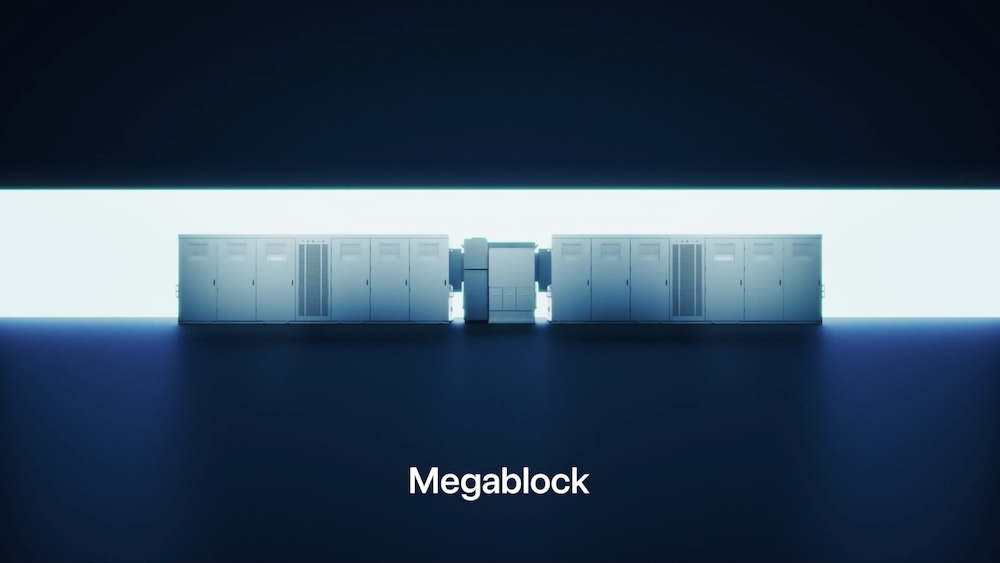
Tesla’s solar portfolio continues to expand further. SpaceX, another entity backed by Elon Musk, has signed a deal with German equipment supplier Singulus Technologies for a turnkey heterojunction (HJT) solar cell production line, with additional lines to follow. The first line is due for delivery in the first half of 2027. At the ongoing RE+ 2026 exhibition, Tesla also unveiled Powercore, a new solid-state medium-voltage power electronics platform. Housed in a single cabinet, the unit integrates transformers, circuit breakers and inverters to convert between medium-voltage AC and low-voltage DC. It is designed for utility-scale solar farms, energy storage facilities and data-center power systems, with first shipments expected in 2027.