Image:Juniper Green Energy
Recently, the Union Cabinet of India, chaired by Prime Minister Narendra Modi, has approved a Viability Gap Funding (VGF) scheme for grid-scale energy storage. The fiscal support will run from FY 2026–27 to FY 2030–31, with a total allocation of ₹145billion, equivalent to approximately USD 1.53billion.
Viability Gap Funding is a widely adopted government support instrument in India. It targets infrastructure projects that deliver long-term social benefits yet are not commercially viable on standalone market returns. The funding is generally disbursed in the form of capital subsidy to bridge project revenue gaps and draw private capital into public-private partnership (PPP) ventures.
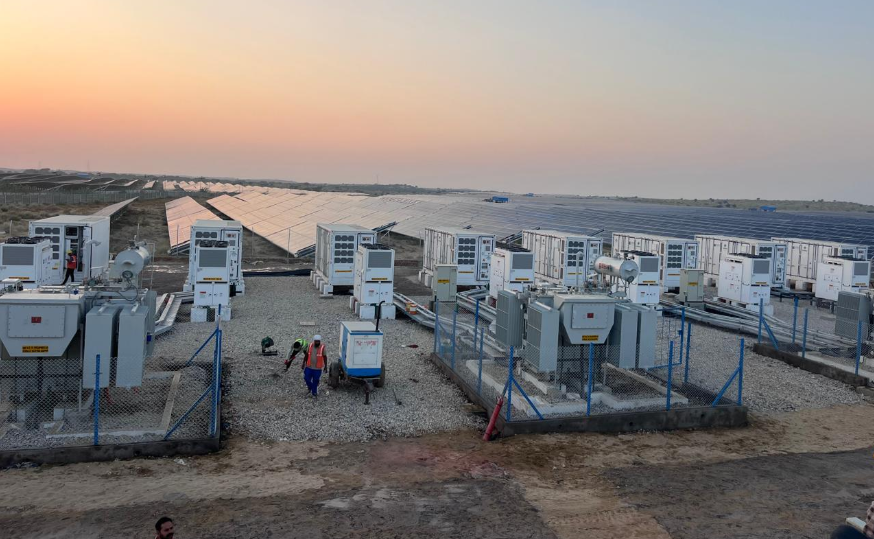
Under the plan, the policy will back the deployment of 92GWh of new grid-scale energy storage capacity, which equals 170% of India’s existing installed base for this segment. It will help the country progress toward its overall target of 411GWh of grid-connected energy storage by FY 2031–32. The capacity mix includes 60GWh of pumped hydro storage, 30GWh of battery energy storage systems (BESS), and 2GWh reserved for other innovative storage technologies. Collectively, these projects are expected to unlock total investments worth ₹9760billion.
Storage capacity will be allocated through tariff-based competitive bidding. Public-private power distribution companies are eligible to apply for VGF support for BESS and pumped hydro projects, while initiatives deploying alternative storage technologies can be developed by both public and private entities.
The policy also aims to foster India’s domestic energy storage industrial ecosystem and cut reliance on imported components through demand-side incentives. To encourage local manufacturing, the scheme mandates a minimum domestic content requirement (DCR) of 40% for BESS projects.