Brazil’s battery energy storage system (BESS) market is advancing far slower than global trends, industry experts highlighted in a recent webinar hosted by the Brazilian Association of Energy Storage Solutions (Absae). While battery storage has become a mature, mainstream technology worldwide with installed volumes surpassing pumped hydro capacity, stark regional disparities persist in deployment scale.
Industry leaders stressed that BESS should be viewed as a complementary solution rather than a rival to thermal generation and renewable assets. Fábio Lima, Executive Director of Absae, emphasized the need for balanced grid planning strategies. “The debate is not BESS versus thermal plants, nor renewables versus energy security. The question is what is the best combination of security, price, ‘renewability’, and flexibility. And to that question, BESS is certainly part of the answer,” Lima said. He added that BESS enables flexible shifting of renewable power generation to peak demand periods, defers costly grid reinforcement investments, and supports the integration of new power loads.
Absae President Markus Vlasits pointed out that BESS is the lowest-cost solution globally for addressing diverse grid challenges, yet Brazil’s market growth remains sluggish. Though behind-the-meter storage systems are gaining traction and easing grid load pressure, the projected 1 GW national capacity falls well short of Brazil’s full potential. Vlasits called for improved market mechanisms, stating that clear price signaling, targeted contracting rules and a complete regulatory framework are essential to accelerate sector development.
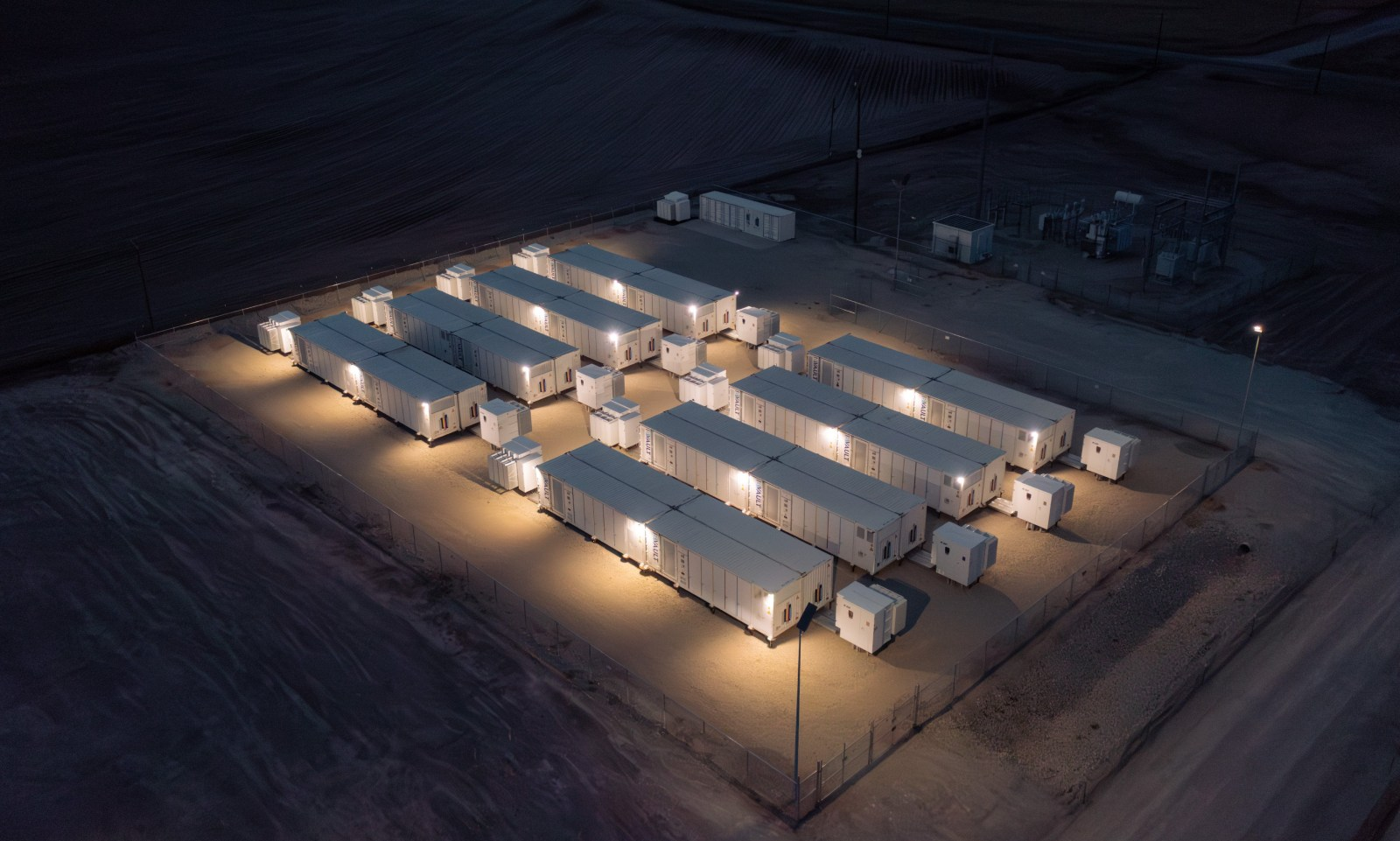
Chile’s mature energy storage sector offers a valuable regional benchmark for Brazil. Atlas Renewable Energy shared operational insights from its 200 MW/800 MWh BESS project paired with the 244 MWp Sol del Desierto solar plant in Chile. According to Fabio Bortoluzo, Atlas’s country manager, the storage asset achieved over 98% availability when delivering ancillary services including primary and secondary frequency control. The system effectively narrowed power price spreads and reduced solar generation curtailment at the site. Chile currently has 8 GW of BESS projects in deployment, with Atlas planning an additional 800 MW of storage capacity.
Grid-forming technology embedded in modern BESS is emerging as a critical upgrade for Brazil’s power network. Brazil’s National Electric System Operator (ONS) has formulated technical standards for synthetic inertia systems that replicate the stable operation of traditional synchronous generators. Roberto Valer, CTO of Huawei, explained that grid-forming BESS can operate in both grid-connected and off-grid modes, supporting core grid functions such as black start and inertia stabilization. He cited a UK case where BESS played a vital role in frequency regulation after a storm-induced wind farm outage, noting that grid-forming capabilities would have further accelerated power system recovery.
Brazil has already witnessed practical successes of large-scale BESS deployment for grid reinforcement. Renato Guimarães, Expansion and Studies Manager at ISA Energia Brasil, highlighted the country’s first large-scale BESS facility at the Registro substation. Replacing conventional diesel generation, the system eliminated manual load shedding on the São Paulo coast during peak summer power demand. Guimarães noted that future utility-scale capacity reserve BESS projects will deliver systemic peak-shaving services nationwide, scaling up the successful Registro model to resolve broader grid power challenges.