Greece Draws 12.15 GW of Battery Storage Applications Amid Policy and Financing Challenges
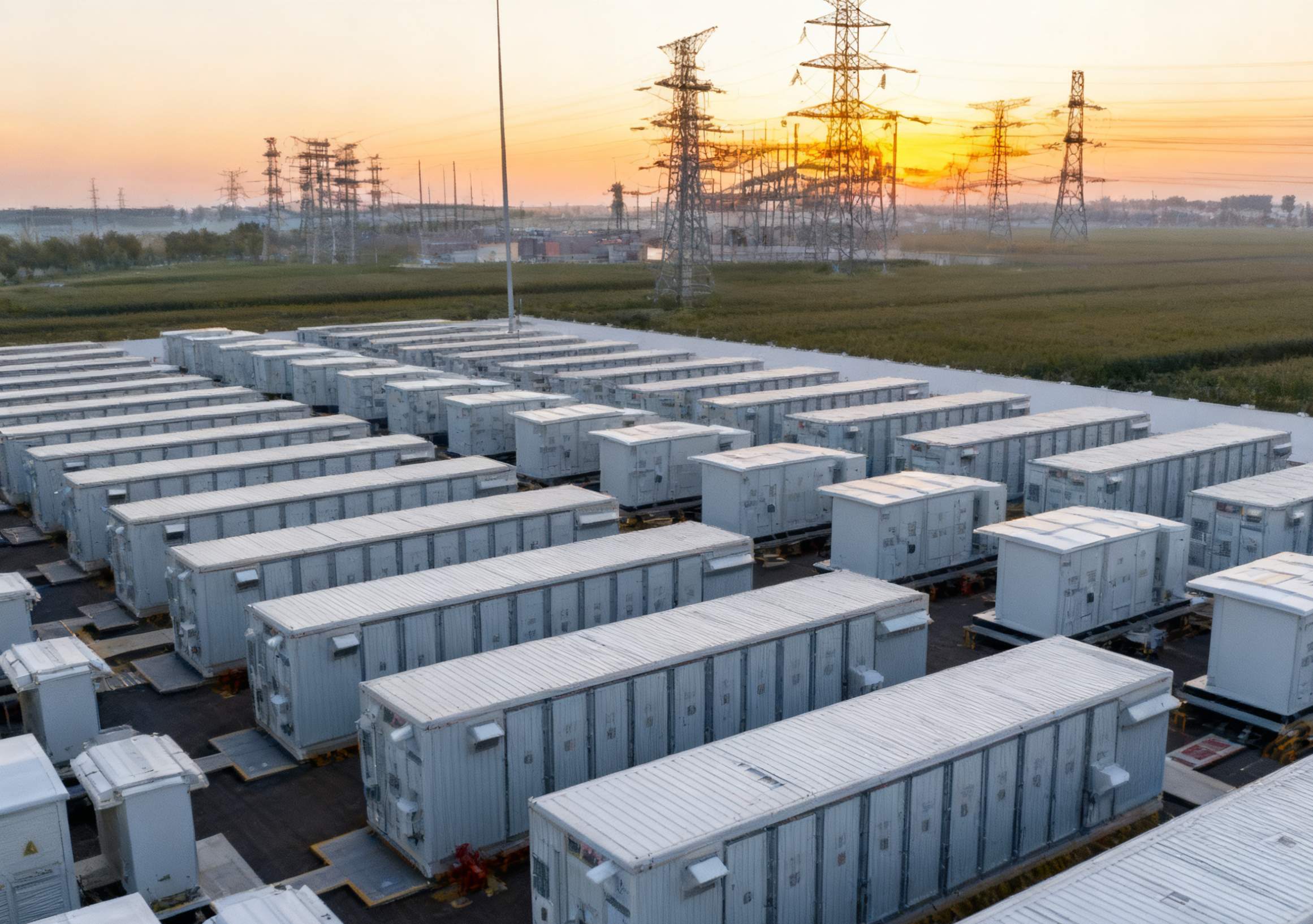
Greece’s push to accelerate energy storage deployment has attracted overwhelming investor interest, with more than 12 GW of battery storage applications submitted under a new national program launched last year.
The initiative targets 4.7 GW of utility-scale, standalone battery storage projects, which will be granted priority grid access and operate on a merchant basis without subsidies. Of the total capacity, 3.8 GW is allocated for connection to the transmission network, while 900 MW is designated for the distribution network. Developers were required to submit grid connection applications by the end of October 2025.
According to Independent Power Transmission Operator, applications for approximately 10 GW of battery capacity were submitted for transmission-level projects. Meanwhile, Hellenic Electricity Distribution Network Operator received applications totalling 2.15 GW. Combined, the total pipeline has reached 12.15 GW—more than double the program’s initial target.
A committee formed by Greece’s Ministry of Environment and Energy, along with the two network operators, is now set to evaluate and rank the applications. Despoina Paliarouta, secretary general for energy and mineral resources, recently stated at a seminar in Thessaloniki that the energy minister has signed the decision to establish the committee, with rankings expected to be announced shortly.
Despite strong interest, investors are facing two key challenges.
The first relates to project ranking criteria. For distribution-connected projects, applications will be assessed on a first-come, first-served basis, provided technical requirements are met. However, for transmission-connected projects, priority will be given to those located closest to substations—an approach that leaves room for interpretation. Uncertainties remain over how factors such as terrain or unavailable substations may influence project eligibility and ranking.
The second challenge lies in project financing. While Greece has introduced a legislative framework for energy storage, several key policy details remain unclear, increasing perceived risk for investors. For example, current regulations do not allow aggregators to represent storage assets in energy markets.
Grid connection terms are also a critical concern for lenders. Financing decisions depend heavily on clarity around operational constraints, such as potential limits on when and how batteries can charge or discharge.
Adding to investor caution is the lack of operational track record in the Greek storage market. In 2023, Greece awarded subsidies to 12 battery storage projects totalling 412 MW through its first auction. However, despite initial timelines, these projects have yet to be fully connected to the grid.
Although testing is now underway for some of these subsidized projects, stakeholders broadly view institutional coordination as a bottleneck. Market participants note that government bodies—including the energy ministry, market operator, and grid operators—are still developing the expertise and coordination required to integrate large-scale storage systems effectively.
As a result, banks remain hesitant to finance merchant battery projects that lack the revenue certainty typically associated with subsidized contracts, posing a potential hurdle to the rapid expansion of Greece’s energy storage sector.

Recommended News
View More
Join Us