
A disturbance in Estonia’s power system on January 20 caused both EstLink interconnections between Estonia and Finland to shut down, resulting in the loss of around 1,000 MW of electricity supply — equivalent to roughly 20% of the Baltic region’s winter power demand.
The shortfall was initially covered by support from the continental European grid, as the 500 MW AC interconnection between Poland and Lithuania temporarily operated at double its rated capacity. Reserve generation capacity within the Baltic states was later activated to stabilize the system.
According to Estonia’s electricity and gas transmission system operator, Elering, the disturbance was caused by oscillations triggered by a 100 MW/200 MWh battery energy storage system located in Kiisa, just south of Tallinn. The incident occurred during final grid connection testing, when DC cables associated with the system tripped.
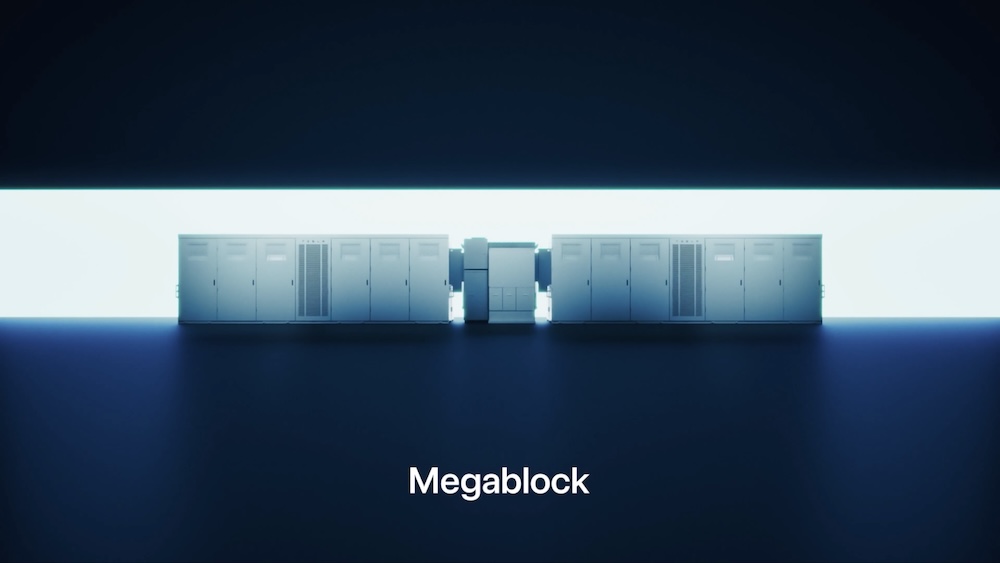
The Kiisa battery project is one of the largest energy storage facilities in the Baltic region. The €100 million project is being developed by Estonian company Evecon in partnership with French firms Corsica Sole and Mirova, and comprises 54 battery containers supplied by Nidec Conversion. Construction began in mid-2024, with grid connection expected by the third quarter of 2025 and full participation in electricity markets planned for early 2026.
The battery park connects to Estonia’s transmission network, operated by Elering, via a 330 kV underground AC cable — the first installation of its kind in Estonia at this voltage level. A key construction milestone was the delivery and installation of a 126-ton transformer.
Elering described the incident as a significant learning experience for the Baltic power system, particularly following the region’s recent desynchronization from the Russian grid and amid the growing number of inverter-based devices connected to the network. While the operator did not initially identify the Kiisa project by name, it confirmed that the oscillation originated from a device connected to Estonia’s main grid whose behavior did not comply with network requirements.
Reigo Kebja, member of Elering’s management board and head of asset management, said the operator is continuing to analyze the incident and assess additional measures to mitigate the impact of similar events in the future.
“It is crucial to raise awareness among market participants about the potential effects of such incidents on the entire electricity system,” Kebja said.
Evecon CEO Karl-Joonatan Kvell later confirmed in a written response to Delfi Ärileht that the device referenced by Elering was part of the Kiisa battery park. Kvell stressed that the issue occurred during system configuration and testing, rather than during normal operations.
He said the battery park is designed to meet all applicable technical standards, and that compliance testing is intended to validate system performance under real-world conditions. Kvell added that responsibility for the incident lies primarily with technology provider Nidec Conversion.
“The ongoing testing phase is being carried out by the system manufacturer, who remains responsible until the system’s final commissioning, which will take place after testing concludes,” he said.